
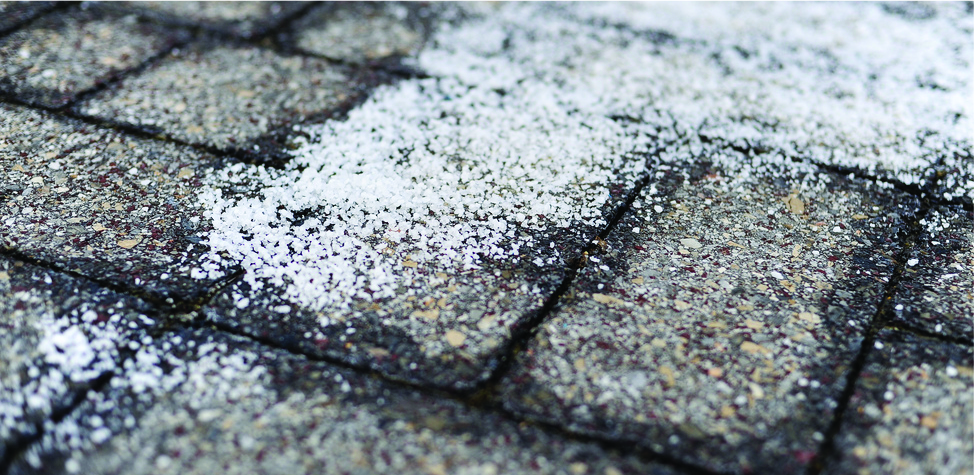
Nobody likes navigating icy pavement in the winter. However, the salt that many people use to clear their pavement comes with some serious drawbacks. Over time, salt damages pavement, corrodes infrastructure, damages flooring, and degrades soil.
Additionally, salt irritates pet paws and can make pets sick if they drink from a salty puddle or lick it off their paws. Birds can even die from ingesting salt.
Salt harms plants, too. Spray from roadways damages buds, twigs, and leaves. It can burn turf grass and evergreen foliage, causing browning. Salt in the soil causes dehydration of the soil and plant roots. When roots absorb the salt, it is directly toxic to the plant. Many other plant problems, up to and including death, are caused or exacerbated by salt-related stress.
Some of salt’s most severe consequences are felt when it makes its way into our state’s water bodies. This happens whenever snow and ice melts. The melted water flows into the storm drains along streets, which lead directly to local waters like the Pomme de Terre. Salt is toxic to aquatic species, which are especially sensitive to the chloride in many salt products. A single teaspoon of salt will irreversibly pollute 5 gallons of water forever – there is no economic way to remove it. In a state that prides itself on its water resources, everyone has reason to be concerned about chloride. The groundwater we drink and the lakes, rivers, and streams we use for fishing and recreation are all at risk from chloride pollution.
According to the Minnesota Pollution Control Agency, chloride concentrations are increasing in surface water and in groundwater across the state. The state’s draft list of impaired waters for 2024 identifies 67 bodies of water with high chloride levels. Our watershed, the Pomme de Terre watershed, is part of the upper Mississippi River basin, which has seen chloride levels increase by 35% from 1989 to 2018.There are more negative impacts from chloride than there is space to list them here.
Unfortunately, there is no truly environmentally-friendly de-icing product. Even unconventional additives like beet juice can have negative effects. Since there are no labeling laws for de-icing products, labels that claim a product is environmentally-friendly or pet-safe may be misleading or flat-out false.
Luckily, smarter salting practices can save you money and lessen your impact on water sources without compromising safety. The first step to smart salting is limiting the amount of salt you need to use by manually removing snow/ice using a physical tool like a shovel, scraper, or snowblower. Clearing a path before the snow freezes means less ice that needs melting. You might not need to use salt at all if you’re able to clear the pavement well enough.
Make sure to use the right de-icing product. Rock salt (sodium chloride/NaCl) is only effective at melting when the pavement temperature is above 15° F. You can find a guide to the right product for the right temperature at the link at the end of this piece. When it is extremely cold, consider putting down sand for traction instead of salting. However, don’t mix sand and salt, as it lessens the effectiveness of both. Sweep up sand after the ice melts to prevent it washing into local waters. Sand can act as a pollutant and cloud water, decreasing its quality and preventing light from reaching aquatic vegetation.
If you must use salt, make sure there are 2-3 inches between each grain. Using a hand spreader may help with this. More salt does not equal more melting. If you see any excess salt after the ice is melted, you have used too much. Sweep it up with a broom to reuse. A 12-ounce mug of salt is all you need to cover 10 squares of sidewalk.
Being sparing and efficient with your salt use will save you time and money. For more smart salting resources, visit https://tinyurl.com/3c6zft5k.
Written by Cameron Berthiaume, Minnesota Greencorps member
 Morris Model